
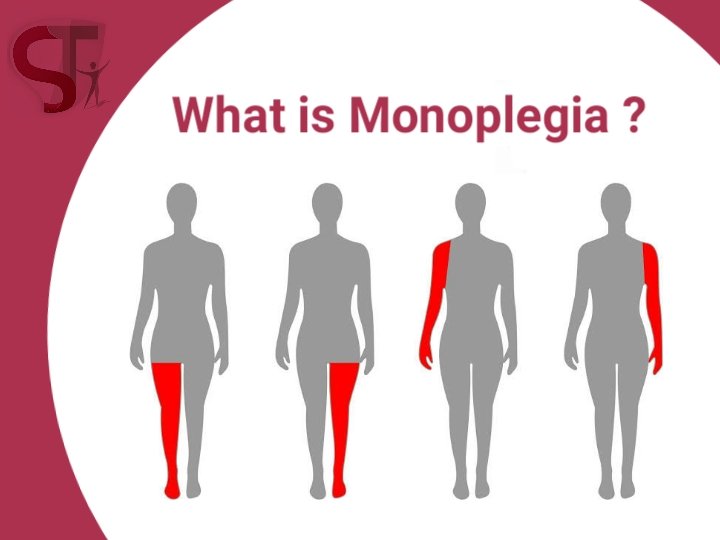
Monoplegia is a form of paralysis that affects only one limb usually an arm or leg while the rest of the body retains normal movement and sensation. Unlike hemiplegia (which affects one entire side of the body) or paraplegia (which affects both legs), monoplegia is localised to a single limb, making it one of the more manageable forms of paralysis with the right physiotherapy and rehabilitation programme.
At Dr. Sahil’s Advanced Physiotherapy Clinic in Thane, we regularly treat patients with monoplegia of the upper limb and lower limb, helping them rebuild strength, restore function, and regain independence through targeted neuro-rehabilitation. In this guide, Dr. Sahil explains what monoplegia is, what causes it, how it is diagnosed, and what physiotherapy treatment looks like in practice.
Most people with monoplegia can take care of themselves and perform daily living tasks, and this is considered a good sign as this disease can severely impede tasks causing the affected limb to gradually deteriorate, get weak, and limp. If not treated effectively, over time, this can lead to a part of the whole limb getting fully paralyzed.
Monoplegia is a form of paralysis that affects only one limb usually an arm or leg. For a broader understanding of how physiotherapy treats different types of paralysis, read our complete guide.
Understanding Monoplegia
Your body has an extensive set of nerve cells that move your muscles around besides operating several other functions. These include movements that you can control or voluntary and those you can’t control or involuntary movements. When these nerves become damaged, it can disrupt the signal sent to your muscles or other body functions which eventually leads to muscle paralysis or weakness in the affected area. This condition is known as monoplegia.
Causes of Monoplegia
This condition can be caused by cerebral palsy. Cerebral palsy is a disorder that affects the movement and coordination of muscles which, in turn, can damage sight, hearing, and sensation. Did you know that cerebral palsy is one of the disabilities which can affect at least 1,000 children worldwide?
It can also be caused by a bad injury or trauma to the brain, upper or lower limb, and spinal cord. Monoplegia can also be caused by several other factors, such as nerve inflammation or (neuritis), a stroke, tumors affecting the brain or the spinal cord, autoimmune diseases like multiple sclerosis, peripheral neuropathy, and even conditions like a herniated disc or bone spurs.
Symptoms of Monoplegia
The signs of monoplegia of the upper limb as well as any other affected body part can arise suddenly. In some cases like progressive cerebral palsy or motor neuron disease these symptoms progress gradually . This illness can lead to the inability to move one of your legs or your arm, besides which you may also experience the following symptoms in the affected limb:
· Muscle stiffness or spasms
· Loss of muscle tone
· Decreased feeling
· Muscle floppiness
· Sensations or feelings of numbness
· Curling of the fingers or toes in the affected limb
How is Monoplegia Diagnosed?
Accurate diagnosis of monoplegia is essential because the treatment approach depends entirely on identifying the underlying cause. At Dr. Sahil’s clinic in Thane, we work alongside neurologists and orthopaedic specialists to ensure each patient receives a thorough evaluation before beginning physiotherapy. Diagnosis typically involves the following steps:
1. Medical History & Physical Examination
The doctor will take a detailed medical history to understand the onset of symptoms — whether they appeared suddenly (suggesting stroke or injury) or gradually (suggesting cerebral palsy or motor neuron disease). A physical examination assesses muscle tone, sensation, reflexes, and the range of movement in the affected limb.
2. MRI Scan (Magnetic Resonance Imaging)
MRI is the gold standard for diagnosing monoplegia. It provides detailed images of the brain and spinal cord, helping identify structural abnormalities, stroke-related damage, tumours, or nerve compression that may be causing the paralysis. For stroke-related monoplegia, brain MRI is the preferred first investigation.
3. EMG (Electromyography) & Nerve Conduction Studies
EMG measures the electrical activity of muscles and nerves in the affected limb. This helps identify conditions like brachial plexopathy, peripheral neuropathy, or nerve damage that may be causing monoplegia without any visible brain injury.
4. CT Scan
A CT scan may be performed if MRI is not immediately available, particularly in emergency stroke situations. It helps rule out haemorrhage (bleeding in the brain).
5. Blood Tests
Blood tests can detect infections, autoimmune conditions like multiple sclerosis, inflammatory diseases, or vitamin B12 deficiency — all of which can cause nerve damage leading to monoplegia.
Once a diagnosis is confirmed, a personalised physiotherapy rehabilitation plan is created based on the specific cause and severity of the monoplegia.
What is Spastic Monoplegia?
Spastic monoplegia is an illness that can cause damage in the brain before birth, during delivery, and even within the first few years of a child’s life. It prevents normal development of motor functions and makes small tasks difficult, like picking up items or even walking. It is prudent to remember that this condition is incurable and the child affected by it will not recover.
Most of the cases of spastic monoplegia occur due to development defects during pregnancy. However, a medical error can also result in it. If the baby does not get sufficient oxygen during and right after birth, it can lead to spastic monoplegia. The condition can also occur if during labor the baby remains too long in the birth canal, the attending obstetrician incorrectly uses vacuum or forceps extraction to get the baby out, or where the umbilical cord comes out of the body before the baby.
Is Monoplegia Curable?
There is no current cure for monoplegia, instead, the treatment aims at improving the quality of life for the individual and includes a variety of options like:
· Physical exercises – Physiotherapy can be helpful to build and maintain strength, flexibility, and vigor in the affected limb. Physical exercises like stretching, massage, or even other techniques can stimulate muscles and help the patient get some relief.
· Occupation therapy – This form of therapy teaches the individual to perform daily household tasks like bathing, dressing, washing, or even cooking at ease.
· Devices to assist – Devices or equipment like walkers, wheelchairs, voice-activated devices, and specialized grips and handles can make these individuals’ daily lives easier.
· Medications – With monoplegia, patients are put on pain medications or even muscle relaxants to help alleviate the pain of muscle stiffness and even spasms.
· Surgery – Spastic monoplegia can sometimes be quite painful and if it is caused by a tumor or a nerve compression then surgery may be required. Surgery is used as a last resort in this type of disorder and is only done if the patient is really bad or is worsening.
Physiotherapy Treatments for Monoplegia at Our Thane Clinic
Physiotherapy is the cornerstone of monoplegia treatment. At Dr. Sahil’s Advanced Physiotherapy Clinic in Thane, our neuro-rehabilitation programme for monoplegia is built around the principle of neuroplasticity the brain’s ability to rewire itself and form new neural pathways after injury. Here are the key physiotherapy approaches we use:
1. Passive & Active Range-of-Motion Exercises
In the early stages, when voluntary movement is absent or minimal, the physiotherapist moves the affected limb through its full range of motion manually. This prevents joint stiffness, muscle contractures, and maintains circulation in the paralysed limb. As recovery progresses, the patient gradually takes over more of the movement actively.
2. Constraint-Induced Movement Therapy (CIMT)
CIMT is particularly effective for upper limb monoplegia following stroke. The unaffected arm is gently restrained, forcing the patient to use and repeatedly practice with the paralysed arm during daily activities. Research shows CIMT is more effective than standard physiotherapy alone for improving arm function in monoplegia patients.
3. Functional Electrical Stimulation (FES)
Small electrical pulses are delivered to the paralysed limb via electrode pads placed on the skin. FES triggers muscle contractions in the affected limb, preventing muscle atrophy and supporting the brain’s neuroplastic recovery. It is particularly useful for patients with complete monoplegia who cannot yet initiate voluntary movement.
4. Strengthening & Coordination Exercises
As movement returns, progressive resistance exercises rebuild muscle strength in the affected limb. Coordination drills — like picking up objects of different sizes, writing, or performing fine motor tasks — help restore precise limb control.
5. Gait Training (Lower Limb Monoplegia)
For patients with monoplegia of the leg, gait retraining is a priority. Using parallel bars, gait belts, and body-weight support systems, our Thane physiotherapists systematically rebuild the patient’s ability to stand, balance, and walk — with or without assistive devices.
6. Occupational Therapy Integration
Alongside physiotherapy, our team integrates occupational therapy techniques — teaching patients adapted ways to perform daily tasks like dressing, bathing, and cooking using one functional limb, maximising independence throughout the rehabilitation process.
Each patient at our Siddhachal and Naupada clinics receives a personalised treatment plan reviewed and adjusted regularly based on progress. Home physiotherapy visits are also available across Thane for patients unable to attend the clinic.
The Final Words
Monoplegia of the lower limb or any other single limb happens when the nervous system is disrupted in the affected area due to damage and can suddenly appear after a while. Although this illness can improve over time, the best bet is to keep the patient comfortable and improve the quality of life. Dealing with monoplegia can be very strenuous on the family members and the person as well. Doctors, most of the times, advise that the individual be admitted, which makes going for physical therapy, exercises, and any other treatments much easier to give. Patients with this disease are offered to join support groups and are given a variety of treatment options to help improve the disease. These treatments majorly focus on alleviating symptoms and reducing the pain.
Need help with Monoplegia recovery? While Monoplegia can be challenging, consistent physiotherapy is the key to regaining independence.
At Dr. Sahil’s Advanced Physiotherapy Clinic, we specialize in neurological rehabilitation for adults and children.
Q: What is the difference between monoplegia and hemiplegia?
A: Monoplegia affects only one limb — either one arm or one leg — while the rest of the body remains functional. Hemiplegia affects one entire side of the body, including both the arm and leg on the same side. Monoplegia is generally considered less severe and more localised, making targeted physiotherapy particularly effective for recovery
Q: Can monoplegia be cured with physiotherapy?
A: There is currently no complete cure for monoplegia. However, physiotherapy — especially when started early — can significantly restore movement, strength, and function in the affected limb through neuroplasticity. Many patients with stroke-related or injury-related monoplegia regain substantial limb function with consistent rehabilitation. At Dr. Sahil’s clinic in Thane, we have helped numerous monoplegia patients regain independence through targeted neuro-physiotherapy
Q: What causes monoplegia in adults?
A: In adults, monoplegia is most commonly caused by stroke, traumatic brain or spinal cord injury, brain tumours, nerve compression (such as a herniated disc), multiple sclerosis, peripheral neuropathy, or viral infections affecting the nervous system. Unlike in children (where cerebral palsy is the leading cause), adult monoplegia is often sudden in onset and may be partially or fully reversible with early physiotherapy.
Q: Is physiotherapy for monoplegia available at home in Thane?
A: Yes. Dr. Sahil’s Advanced Physiotherapy Clinic offers home physiotherapy visits for monoplegia patients across Thane, including Ghodbunder Road, Siddhachal, Naupada, Manpada, Majiwada, and Kolshet Road. For patients who are bedridden or unable to travel, our registered neuro-physiotherapists bring the full rehabilitation programme to your home. Call 9029731346 to book a home visit today.
- Book an Assessment: Book Now
- Call Us: (+91) 9029731346