
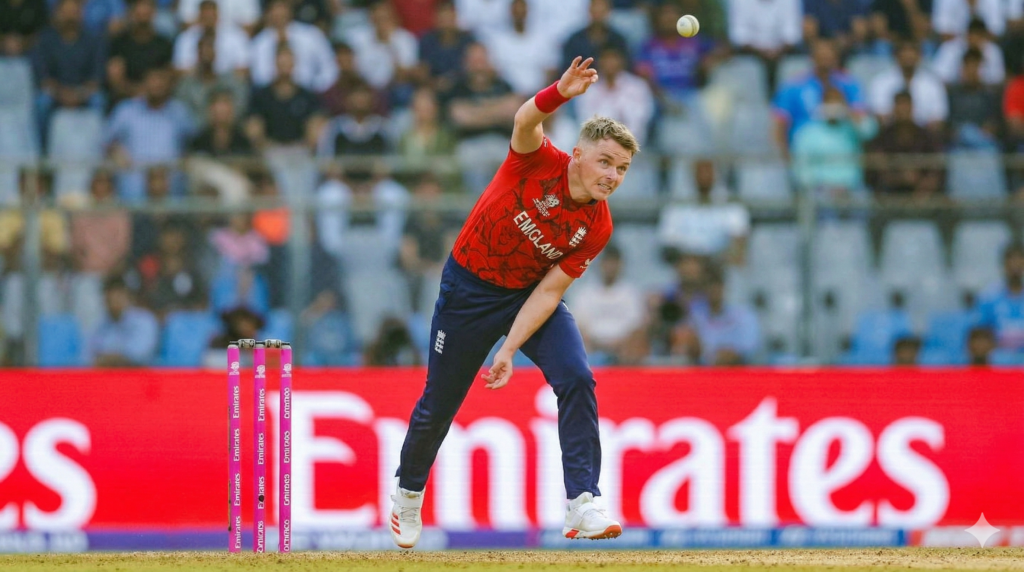
The 2026 IPL season has been rocked by several high-profile absences, but few have sparked as much debate and concern as the withdrawal of England’s star all-rounder, Sam Curran. For fans of the Rajasthan Royals (RR), the news was a significant blow, leading to the immediate and viral question: “Why is Sam Curran not playing IPL?”
As a physiotherapist at Dr. Sahil’s Advanced Physiotherapy Clinic, I view these sports headlines through a different lens. While the media focuses on the “tough decision” and team compositions, we must look at the physical toll a “building injury” takes on an elite athlete. Sam Curran’s withdrawal isn’t just about a missed season; it is a textbook study in injury prevention and the long-term management of the adductor complex.
In this 1,200-word deep dive, we will explore the clinical nature of Sam Curran’s groin injury, the risks of “playing through the pain,” and how his replacement—Australian sensation Cooper Connolly—fits into the tactical and physical void left behind.
The Clinical Breakdown: What is a “Building” Groin Injury?
In his official statement, Sam Curran described his withdrawal as a preventative measure due to a “building injury.” In the world of sports physiotherapy, this is a red flag. A building injury suggests a chronic overuse syndrome rather than an acute tear.
For a cricketer like Curran, the groin (the adductor muscle group) is under constant, multidirectional stress.
- The Bowling Action: As a left-arm fast-medium bowler, Curran’s “delivery stride” requires massive eccentric strength in the lead leg’s adductors to stabilize the pelvis during the high-impact landing.
- The All-Rounder’s Burden: Unlike a specialist, an all-rounder like Curran never gets a “rest” on the field. If he isn’t bowling four overs of high-intensity pace, he is sprinting between wickets or diving in the deep.
When an injury is “building,” it means the rate of tissue breakdown is exceeding the rate of tissue repair. If he had pushed through the 2026 IPL season, a “niggle” in the groin could have easily transformed into a Grade 3 adductor tear or even sports hernia (Athletic Pubalgia), requiring surgery and six months of recovery.
2. Why Sam Curran Withdrew: The Long-Term Athlete Strategy
At our clinic in Thane, I often consult with young athletes who want to “play through the pain” for a big tournament. I always point to examples like Sam Curran to explain the Strategic Withdrawal.
Curran is 27 years old—entering the absolute prime of his physical career. With a heavy international schedule and future World Cups on the horizon, the decision to skip the IPL is a calculated move to preserve his “athletic longevity.”
The Risk of Compensatory Injuries
As we discussed regarding MS Dhoni’s calf strain, the body is a master of compensation. If Curran’s groin is weak, his body will naturally shift the load to his lower back or his hamstrings.
- Lumbar Stress: A weak groin leads to an unstable pelvis, which forces the lower back to work harder during the bowling leap. This often leads to stress fractures in the spine.
- The Kinetic Chain: By withdrawing now, Curran is preventing a “domino effect” of injuries that could have sidelined him for the rest of 2026 and 2027.
The “Thane Professional” Parallel: Ignoring the Niggles
You don’t need to be an IPL star to experience a “building injury.” Many of my patients in Thane are corporate professionals who have taken up marathon running or weekend football.
I often hear: “Doctor, it’s just a small ache in my inner thigh, I can still run.” This is exactly how Sam Curran’s injury started. In a professional environment, you have a team of physios telling you to stop. In daily life, you are your own coach. If you are experiencing a persistent ache in the groin area that worsens with activity and lingers the next morning, your body is giving you the same signal Curran received.
Ignoring these signals leads to Adductor Tendinopathy, a condition where the tendon becomes thick, painful, and loses its ability to handle load. At that stage, recovery takes months of specialized eccentric loading—not just a few days of rest.
4. Meet the Replacement: Cooper Connolly and the Physical Shift
With Curran out, the Rajasthan Royals moved quickly to secure Australian all-rounder Cooper Connolly. From a physical and tactical standpoint, this is a fascinating replacement.
Who is Cooper Connolly?
Connolly is a young, dynamic talent who shot to fame in the Big Bash League. He brings a different physical profile to the team. While Curran is a seasoned veteran with significant “mileage” on his joints, Connolly represents the “fresh” explosive power of a younger athlete.
The Tactical Fit
RR needed someone who could replicate Curran’s dual-threat capability. Connolly provides:
- Explosive Batting: Much like Curran, he can stabilize an innings or finish with a high strike rate.
- Bowling Variety: While Curran is a pacer, Connolly provides left-arm orthodox spin. This change actually reduces the physical load on the “replacement” slot, as spin bowling places significantly less eccentric stress on the adductor muscles compared to fast bowling.
For the Rajasthan Royals, this might actually be a blessing in disguise for the hot Indian summer, where the pitches begin to turn and the workload of a fast-bowling all-rounder becomes grueling.
5. The Rehab Protocol: How Sam Curran Gets Back to 100%
If Sam Curran were a patient at Dr. Sahil’s Advanced Physiotherapy Clinic, his “preventative rehab” would follow a very specific, evidence-based roadmap:
Phase 1: Isometric Loading (Weeks 1-2)
We start with “squeezing” exercises. Isometrics allow the adductor muscles to fire and maintain strength without changing length, which protects the sensitive tendon-bone interface.
Phase 2: Dynamic Strengthening (Weeks 3-4)
Once the pain subsides, we introduce lateral lunges and “Copenhagen planks.” These are the gold standard for groin rehab, specifically designed to build the tensile strength needed for the bowling delivery stride.
Phase 3: The Return to Running
Before he bowls a single ball, Curran must pass a series of “change-of-direction” tests. We look for symmetry in his “Force Plate” data ensuring his left and right legs are producing equal power during a side-step.
6. Advanced Recovery Technology
In our clinic, we use advanced tools to speed up this process for our local athletes:
- Pelvic Realignment: Using chiropractic adjustments to ensure the adductors aren’t being overstretched due to a tilted pelvis.
- Dry Needling: To release the deep tension in the pectineus and adductor longus muscles.
7. Final Verdict: Was it the Right Move?
From a physiotherapy perspective, the answer to “Why is Sam Curran not playing IPL?” is clear: Professional Maturity. It takes immense discipline for an athlete to walk away from a multi-crore contract to prioritize their health. By choosing rehab over “playing through,” Curran is ensuring that when he does return, he will be 100% explosive, rather than a 70% version of himself struggling with a chronic injury.
For the Rajasthan Royals, the arrival of Cooper Connolly marks a new chapter for the 2026 season. While they will miss Curran’s experience, the physical freshness of Connolly might be exactly what a long tournament requires.
8. Conclusion: Don’t Wait for the “Break”
Sam Curran’s “building injury” is a lesson for all of us. Whether you are playing in the IPL or playing a match at your local turf in Thane, your body is always communicating with you.
Are you experiencing a “niggle” that won’t go away? Don’t wait for it to become a season-ending injury. At Dr. Sahil’s Advanced Physiotherapy Clinic, we specialize in sports injury prevention and advanced rehabilitation. We help you identify those compensation patterns early so you can stay on the field (or in the office) without pain.
[Book Your Sports Injury Assessment Today — Stay Ahead of the Game]