
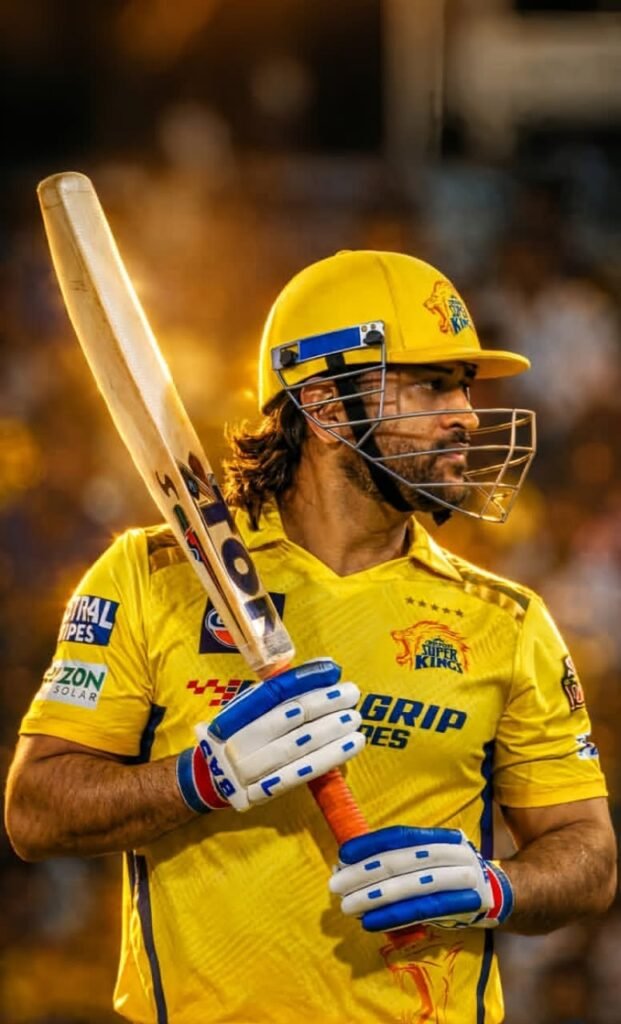
The most common question in Indian sports today is simple: “Is Dhoni playing IPL or not?” While fans are waiting for the toss, as a physiotherapist at Dr. Sahil’s Advanced Physiotherapy Clinic, I am looking at the biological reality behind the scenes.
MS Dhoni’s current calf strain is not just a random injury; it is a clinical masterclass in how the human body manages age, previous surgeries, and high-intensity demands. This deep dive explains why Mahi is sidelined, the science of his recovery, and what it means for every professional over the age of 40.
Why Dhoni is Not Playing the IPL Match: The 2023 Connection
To understand why Dhoni is sitting out today, we have to look back at his May 2023 knee surgery. In physiotherapy, we view the body as a “kinetic chain” where every joint depends on the other. When a major link like the knee is surgically repaired or weakened, the body instinctively recruits other muscles to stabilize the limb.
This is a Compensation Pattern. For the last two years, Dhoni’s calf muscles—the gastrocnemius and soleus—have been working “overtime” to protect his knee during wicketkeeping and sprinting. Under the explosive demands of the 2026 season, the calf finally reached its physiological breaking point. As a specialist, I often see that the site of pain (the calf) is rarely the original site of the problem (the knee).
2. The Biology of Age: Why 44 is a Critical Threshold
Many people asking “why dhoni is not playing IPL 2026” don’t realize the internal changes happening in an elite athlete’s body. At 44, Dhoni is performing at an age where most players have been retired for a decade.
The 30% Muscle Fiber Rule
As I highlighted in my recent clinical analysis, by age 44, an individual typically loses nearly 30% of their Type II muscle fibers.
Type II Fibers: These are “fast-twitch” fibers responsible for explosive power and sudden bursts of speed.
The Clinical Impact: With 30% fewer explosive fibers, the remaining muscle tissue is under significantly higher tension.
The Result: The risk of a “muscle snap” or strain during a sudden sprint is exponentially higher than it was in his 20s.
3. “The Bombay Station Sprint”: A Reality Check for the Common Man
At our clinic in Thane, I often tell my patients: “You don’t have to be MS Dhoni to suffer an MS Dhoni injury.”
Think about the Thane or Mumbai railway stations. If you are 40+ and you suddenly sprint to catch a closing train door, you are demanding the exact same “explosive” power from your calf as a cricketer taking a quick single. If you have a sedentary desk job or an old injury you’ve ignored, your calf is likely already in a high-risk state.
Your body sends signals—morning stiffness, a “tight” feeling in the lower leg, or heavy heels. Ignoring these signals is exactly how a minor tightness turns into a Grade 2 tear that keeps you off your feet for a month.
4. Understanding the Grades of a Calf Strain
When looking for the MS Dhoni calf strain recovery time, you must understand the clinical severity of the injury. We categorize these into three grades:
Grade 1 (Mild): Microscopic tearing of muscle fibers. You feel a “pull” but can still walk. Recovery usually takes 1–3 weeks.
Grade 2 (Moderate): A significant partial tear. This involves sharp pain, swelling, and an inability to run. Recovery takes 4–8 weeks.
Grade 3 (Severe): A complete rupture of the muscle. This often requires surgery and 3–6 months of rehab.
Dhoni is currently managing a Grade 1 strain. While it sounds minor, for a 44-year-old wicketkeeper who must perform hundreds of deep squats per match, even a minor strain can lead to a career-ending rupture if he returns too early.
5. Clinical Mechanics: The Gastrocnemius vs. The Soleus
Not all calf strains are created equal. The calf is made of two main muscles:
Gastrocnemius: The “bulgy” muscle you see. It is responsible for explosive power.
Soleus: The deeper muscle that acts as the “second heart,” pumping blood back up. It is vital for endurance.
In wicketkeeping, the soleus is under constant isometric tension in the squatting position, while the gastrocnemius is fired during the explosive jump to catch an edge. Dhoni’s rehab must address both: endurance for the 20 overs and power for the occasional sprint.
6. Will Dhoni Play Next Match? The 4-Phase Rehab Plan
If you are wondering “is dhoni playing IPL or not” for the upcoming fixture, his return depends on his progress through these four clinical phases:
Phase 1: Protection (Days 1–5)
The focus is on reducing inflammation. We use the POLICE principle (Protection, Optimal Loading, Ice, Compression, Elevation). Rushing into the nets during this phase is the primary cause of re-injury.
Phase 2: Controlled Loading (Days 6–12)
We “teach” the muscle to handle weight again through isometric holds and gentle heel raises. This restores the muscle’s confidence without over-stretching the healing fibers.
Phase 3: Explosive Re-training (Days 13–21)
This is where Dhoni has been spotted recently—taking throwdowns in the nets. However, batting in a controlled net session is different from a match. In a match, you have to turn 180 degrees suddenly to chase a ball, which places an unpredictable load on the calf.
Phase 4: Full Return to Play
A player is only “match fit” when they can perform reactive, unpredictable movements without pain. For a veteran athlete, we prefer to wait an extra week to ensure the tissue is fully remodeled.
7. Advanced Solutions at Dr. Sahil’s Clinic
For our patients in Thane, we use the same advanced technology employed by professional sports teams to speed up recovery:
Chiropractic Adjustments: Ensures the pelvis and spine are aligned, preventing uneven weight distribution on the legs.
High-Intensity Laser Therapy: Accelerates cellular repair in the damaged muscle fibers.
Dry Needling: Releases “trigger points” in the calf caused by long-term compensation from the knee.
8. Preventative Strategies for Athletes Over 40
To avoid being the person asking “why am I injured,” follow these three rules:
- Warm-up is Mandatory: At 40, your muscles are less elastic. You need at least 15 minutes of dynamic stretching.
- Strength Training: Don’t just do cardio. Building the soleus muscle through seated calf raises is the best insurance against tears.
- Listen to the “Niggles”: If your calf feels tight for more than two days, it’s a warning.
9. Final Verdict: The Expected Return
Based on the biological reality of 30% fiber loss and his previous surgical history, a safe return for MS Dhoni is likely toward the end of April. While fans are eager, rushing back for a mid-April match increases the risk of a season-ending relapse.
10. Conclusion: Are You Listening to Your Body?
MS Dhoni’s injury is a reminder that excellence requires constant maintenance. Whether you are a professional athlete or a professional working in a corporate office in Mumbai, your body operates on the same laws of physics.
Stop asking “will dhoni play next match” and start asking “is my body prepared for my next move?” If you feel calf tightness, knee instability, or are recovering from an old surgery, come visit us at Dr. Sahil’s Advanced Physiotherapy Clinic. We specialize in identifying those “hidden” compensation patterns before they become injuries.
[Book Your Assessment Today — Don’t Let a Strain Sideliner You]